

Are Marshmallows Gluten Free
Most marshmallows made in the United States use a short list of ingredients: sugar, corn syrup, water and gelatin. These basic components are generally safe for people who avoid gluten, because the protein comes from wheat, rye, barley and triticale.
Still, some brands add wheat starch, flavor blends, or use shared equipment. That can introduce cross-contact and raise risk for sensitive people.
The FDA allows “gluten-free” labels when a product has less than 20 ppm of gluten. Labels help, but products without that claim can still be low risk if their ingredient list is clean.
This guide explains which ingredient choices are typically safe, why labels matter, and how to pick marshmallow treats with confidence. Small checks at the store or a quick call to manufacturers go a long way toward peace of mind.
The quick answer for U.S. shoppers, right now
In the united states, most store marshmallows are made from sugar, corn syrup, water and gelatin. Those recipes generally do not contain gluten, so many products are effectively marshmallows gluten-free by ingredient.
That said, some products include wheat-derived items like wheat starch or wheat-based glucose syrup. Cross-contamination can also occur when lines handle wheat ingredients. For people managing celiac disease or intolerance, these risks matter.
- Choose products with a clear gluten-free label when possible.
- Avoid bags with a “may contain” wheat statement if you need strict avoidance.
- Scan ingredient lists for wheat starch or glucose syrup, and call brands when unsure.
| Choice | Best for | Why |
|---|---|---|
| Labeled gluten-free | People with celiac disease | Meets FDA |
| Unlabeled but simple ingredients | Mild intolerance or general shoppers | Often safe but check factory practices |
| Products with “may contain” | Avoid if strict | Sign of possible cross-contamination |
Formulas and facilities can change, so check each package at the store. When in doubt, contact the brand’s consumer line or build a short list of trusted brands to make shopping faster and safer.
For more detailed guidance and brand notes, see this helpful roundup.
Are Marshmallows Gluten Free
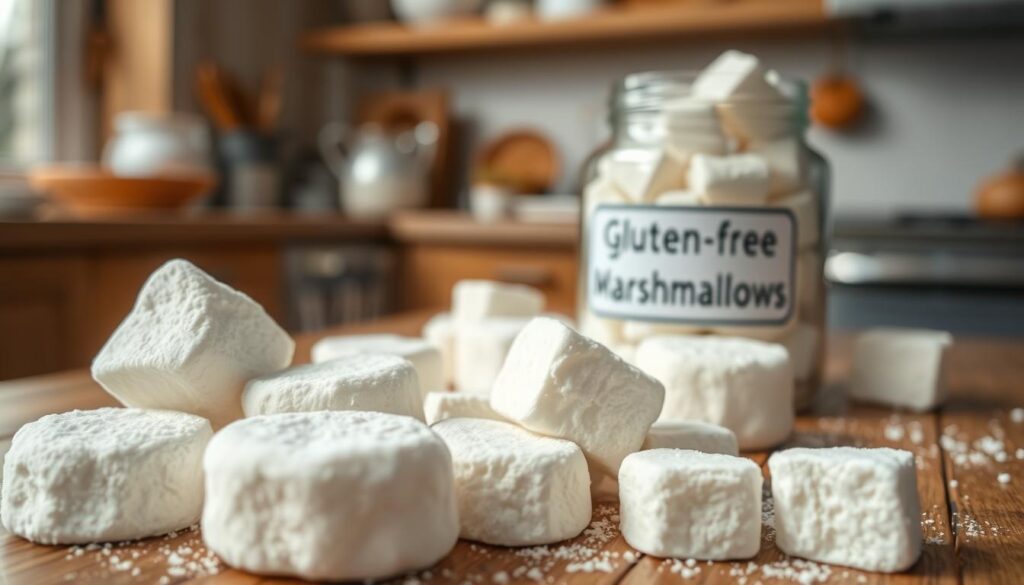
Typical U.S. marshmallow recipes rely on a few basic sweeteners and gelatin.
Classic ingredients such as sugar, corn syrup, and gelatin are naturally free of gluten. That is why many marshmallows are safe by recipe alone. These simple ingredients pose low risk for most shoppers.
Risk rises when manufacturers add wheat starch, wheat-based glucose syrup, or ambiguous natural flavors. Such additions can introduce gluten from grains. Cross-contact during processing is also possible, so check packaging and brand statements.
Understanding labels and certification
The FDA allows a “gluten-free” claim for products under 20 ppm gluten. Independent programs like GFCO often use stricter limits, offering added assurance for people with disease gluten concerns.
- Look for labeled gluten-free or GFCO certification for stricter control.
- Scan ingredient lists for wheat, wheat starch, or wheat-derived syrup.
- When flavors are vague, contact brands to confirm sourcing.
| Ingredient type | Typical risk | Action |
|---|---|---|
| Simple recipe (sugar, corn, gelatin) | Low | Usually safe if no advisory |
| Wheat starch or wheat syrup | High | Avoid if strict |
| Natural flavors (unspecified) | Variable | Call brand for clarity |
How to read marshmallow labels to avoid gluten
Start label checks by scanning the ingredient list for words that signal wheat or barley. Look for clear red flags first, then review caution items that may hide grain derivatives.
Red-flag terms to avoid
- Wheat protein, wheat starch, wheat flour
- Malt and malt extracts
- Latin names: triticum, hordeum, secale
Be cautious with these entries
- Modified food starch, maltodextrin, dextrin
- Hydrolyzed protein or vegetable protein
- Natural flavors or colorings when source is unspecified
Advisory statements and when to call
“May contain” and “processed in a facility with wheat” point to cross-contamination risk rather than intentional ingredients. People needing strict avoidance should favor labeled products and avoid items that list wheat or barley outright.
| Risk | Action | Why |
|---|---|---|
| Red-flag terms | Avoid | Direct source of gluten |
| Caution items | Verify with brand | Source may be wheat-derived |
| May contain statements | Decide by tolerance | Indicates cross-contamination risk |
When label language is vague, call the manufacturer to ask about ingredient sourcing and manufacturing lines. Keep a short list of trusted brands and update it if recipes or facilities change.
Gluten-free marshmallow brands you can trust in the United States
Several U.S. brands now list clear allergen statements that make selecting safe treats easier. Choosing labeled options cuts guesswork about facility practices and hidden ingredients.
Certified or labeled gluten-free brands
Look first for an explicit labeled gluten-free claim or certification. Trusted brand names that meet this standard include Campfire (Doumak) for most items, Dandies, Trader Joe’s, Elyon, Good & Gather, Sprouts, Hammond’s, Paskesz, Yummallo, and select Peeps varieties.
Note: Campfire’s S’More Pops contain graham crackers and are not safe for strict avoidance. The rest of the Campfire line is generally labeled gluten-free.
Store brands and unlabeled options
Many store-brand marshmallows use corn starch and simple ingredients but lack a labeled gluten-free statement. Always check each package before you buy.
Brands people with celiac disease may wish to avoid
Some large labels do not carry a gluten-free claim and are often avoided by people celiac disease. Examples commonly flagged by advocacy groups include Kraft Jet-Puffed, Great Value, 365 (Whole Foods), and Happy Belly.
- Choose a labeled brand when possible to reduce cross-contact risk.
- Verify new flavors or packaging; brands can change ingredients or lines.
- If uncertain, contact the manufacturer for details on ingredients and facility controls.
| Category | Examples | Best for |
|---|---|---|
| Labeled/certified | Campfire (most), Dandies, Trader Joe’s, Elyon | Safe people celiac; lower risk |
| Often unlabeled (check) | Good & Gather, Sprouts, Hammond’s, Paskesz | Likely safe but verify package |
| Avoid if strict | Kraft Jet-Puffed, Great Value, 365, Happy Belly | Higher risk for cross-contact or wheat ingredients |
Jet-Puffed marshmallows: ingredients, labeling, and celiac safety
Jet‑Puffed uses a familiar recipe: sugar, corn syrup, gelatin, and modified cornstarch. Standard varieties do not list wheat-based ingredients, which explains why many shoppers find them tolerable.
What’s inside and why Kraft skips a gluten claim
Kraft has not placed a certified gluten claim on Jet‑Puffed. The company cites supplier variability for natural flavors and potential cross-contact in manufacturing.
Who should be cautious
People celiac should favor labeled or certified brands for certainty. Those with mild intolerance often tolerate Jet‑Puffed, but sensitivity varies and clinical advice may help.
- Simple ingredients do not guarantee the absence of trace gluten.
- Seasonal or flavored versions can add ingredients that increase risk.
- Contact Kraft for the latest manufacturing and sourcing details before relying on a product.
| Feature | Jet‑Puffed | Certified labels |
|---|---|---|
| Typical ingredients | Sugar, corn syrup, gelatin, starch | Similar recipes, verified sourcing |
| Labeling | No gluten claim | Gluten-free or certification |
| Best for | People with mild intolerance (case-by-case) | Safe people celiac and strict avoidance |
For additional context on label meanings and risk, see this helpful guide from healthline.
Cross-contamination: when gluten sneaks into “safe” marshmallows
Even plain candy can pick up trace grains during production if it shares equipment with bakeries or cereal lines. That cross-contamination can leave tiny gluten residues below the FDA threshold of 20 ppm.
How shared facilities and lines can add trace gluten (<20 ppm)
Shared lines that run both grain-based foods and sweet confections can transfer particles. Residues stay on belts, mixers, and filling nozzles unless cleaning and testing are strict.
Some brands test and certify to limit risk. Others list simple ingredients yet do not confirm separate runs. If you live with celiac disease, choose certified options whenever possible.
Peeps and seasonal flavors: why manufacturing location matters
Peeps use corn starch in many recipes, but production site and seasonal runs can vary. Some batches list a gluten claim; others may be made where wheat is present.
- Cross-contamination happens when shared equipment carries trace grains between runs.
- Contact consumer relations to ask about sanitation, testing, and specific manufacturing lines.
- Keep records of responses and lot codes to track which products felt safest for your household.
| Risk | Action | Notes |
|---|---|---|
| Shared equipment | Prefer certified brands | May leave <20 ppm residues |
| Unverified batches | Call manufacturer | Ask about testing and cleaning |
| Seasonal runs | Check labels each year | Production partners can change |
Beyond the bag: marshmallow fluff, vegan options, and homemade tips
Fluff-style spreads mostly use sugar, corn syrup, and egg whites, so many jars are low risk by ingredient alone.
Still, people should check labels for facility advisories. Notable jarred options include Marshmallow Fluff and Toonie Moonie Organic marshmallow creme. Both often list simple ingredients but read the label before buying.
Vegan and gelatin-free picks
Dandies and similar brands provide vegan, gelatin-free options that also avoid common artificial additives. These are helpful for those avoiding animal products and for some with strict dietary needs.
Homemade tips and ingredient choices
Making marshmallow at home gives control over sourcing. Use certified corn starch, verified sugar, pure vanilla, and labeled syrup to reduce uncertainty.
- Follow simple recipes that list ingredient sources.
- Use separate utensils and clean surfaces to prevent cross-contact.
- Save or photograph packaging for quick reference on future shopping.
| Item | Why it matters | Practical tip |
|---|---|---|
| Jarred fluff brands | Ingredient lists often simple | Check labels and facility statements |
| Vegan options | No gelatin; clearer sourcing | Choose Dandies or certified brands |
| Homemade ingredients | Full control over starch and syrup | Buy certified corn starch and pure vanilla |
Smart shopping checklist for gluten-free marshmallows today
Use this short checklist at the store to pick marshmallows with confidence. A quick scan saves time and helps safe people, especially people celiac.
Scan the front and back for a clear gluten-free label. Then read the ingredient list for wheat, wheat starch, or other red-flag terms. Check advisory notes about shared facilities or “may contain” statements.
Prefer brands with testing or certification. If no label appears, contact the brand to ask about syrup and starch sources, flavors, and sanitation. Recheck companion foods in recipes, such as graham crackers and chocolate, so the whole treat stays safe.
| Step | Quick action |
|---|---|
| 1 | Look for gluten-free label on products |
| 2 | Verify ingredients for wheat or starch |
| 3 | Keep a list of trusted brand marshmallows and save photos |


