

|
Archive for the ‘Super Foods’ Category
Tuesday, April 6th, 2010

This recipe is for my city-riding, bike messenger, fixie friends (you know who you are); my marathon running friends (that would be you, Jack); my ultra-paddling friends (Fly Fish Chick and Banning); and my Livestrong friends who are an inspiration to all.
I’m a big fan of smoothies. You can pack vegetables, fruit, seeds and all kinds of healthy ingredients into a breakfast drink. Just imagine how much your body will love you if you start your day with several servings of high-end antioxidants and building blocks. I won’t go overboard with the geeky details, but Dr. Glyn Howatson, exercise physiologist and lab director at the School of Psychology and Sports Sciences at England’s Northumbria University (I also adore my UK friends), found that marathon runners who drank cherry juice twice a day for 5 days before and 2 days after the London marathon, recovered much faster than those who didn’t. Howatson and his research team (talk about geeky*) also found that cherry juice reduced oxidative stress and inflammation. To make a long and biochemically complicated story short, the substances in cherries help reduce physiological stress, diminish inflammation, boost immune function and speed up recovery time. All good things.
Here’s how I see this and how I apply it to my life and to everyone I mention above. We’re all under physiological stress, whether you’re a bike messenger in NYC (check here to see what that’s like), running the Boston marathon (run Forrest run – uh, I mean Jack), “sprint” paddling 262 miles from central Texas to the Gulf coast (check here for details about my friend Christine and Team Paddlefish’s attempt at this grueling race), or fighting cancer (which puts everything else into perspective).
Whatever we’re doing we’re experiencing oxidative stress.
Okay, so what is oxidative stress?
My Exercise Physiology: Energy, Nutrition, & Human Performance book defines oxidative stress as cellular damage caused by an accumulation of free radicals, which ultimately increases the likelihood of cellular deterioration associated with many diseases, a general decline in central nervous system and immune function and advanced aging. I’m paraphrasing; that’s the abridged version. The detailed version is much scarier. Oxidative stress is to us like kryptonite is to superman.
Yikes! Please pass the cherries.
Here’s what’s so amazing about the human body. We have an elaborate natural defense system that fights against free radicals and other icky things, but we need to equip our army with the right battle tools.
A donut doesn’t have the fire power of a broken squirt gun.
I want a battleship, a rocket launcher and some grenades. That’s what you get when you supply your troops with high-powered, nutrient-dense foods.
Does that make sense?
If so, then let’s support the troops! This smoothie is full of ingredients that help fight cancer, boost the immune system, combat oxidative stress, speed recovery time, restore tissue damage and blah, blah, blah.
power-packed cherry cabbage chia recovery smoothie
what you need
1 cup coconut water (wonderfully healthy electrolyte drink)
1/2 cup fresh or frozen organic cherries, about 10-12 (see health information above)
1/2 cup Redwood Hill Farms vanilla goat yogurt (I love this stuff)
3 or 4 large Napa cabbage leaves, washed and chopped (contain anti-cancer substances)
1 tablespoon ground chia seeds (high-quality protein)
1/2 teaspoon cinnamon (helps balance blood sugar)
what you do
Add ingredients to a blender or VitaMix and blend well.
* Bananas and pears also taste great in this smoothie. Be creative.
I prefer using all organic ingredients, but if nothing else, make sure your cherries are organic. They’re on the Environmental Working Group’s dirty dozen list. Check here for a downloadable shopper’s guide to pesticides in foods.
* I’m very fond of nerdy guys and am not knocking these cute UK science geeks.
You might also like these geeky posts
Performance enhancing beets
Does my butt look big
Go forth and power up your army!
Melissa
Friday, January 1st, 2010

What does the future hold?
Can you see down that long (hopefully) and winding road that makes up your life journey?
No, none of us can. But I’m going with the intention of living a long and healthy life so I want to make sure I’m positioning myself to do so. And in style.
January 1, 2010.
No better day to start than today.
I have trouble considering myself as anything other than early-middle-aged (oooh, that seems strange), so to have that play out chronologically, I need to make my way to the other side of 100. And as I said before, do it with style. I want to be one of those old ladies doing handstands on the beach (or the only one), telemark skiing and climbing mountains with Colorado’s “over the hill gang.” Perhaps sporting an antique blond (also known as grey) ponytail and wearing chic and groovy clothes. Even golden girls can feel good, look good and be full of life. I want to eventually be that golden girl.
Thriving in style.
No time to waste. I need to be preparing for that now. I got sidetracked with the holidays and have been baking (and eating) muffins, cookies and cakes. Drinking red wine and eating dark chocolate. Not exercising enough. My metabolism is off-kilter and I’ve gained 6 pounds. Okay, I know I should know better and I’m not going to mention any names, but it’s not entirely my fault.
Now that the holiday roller coaster ride is over, I’m ready to get back on track with a healthy eating and exercise program. If you’re remotely interested, read on. Here’s what I’m going to do to lose that 6 pounds, reset my metabolism and get back in shape before this uptick in weight becomes the norm. That’s how it happens, my friends. Before you know it, this slow, inauspicious cookie-creep becomes an accepted part of your backside (or spare tire for the guys).
I don’t want to go there. I want to be able to do cartwheels when I’m 80 and each extra pound makes stuff like that sooo much harder to do. Pretty soon playing upside down is longer an option. And that’s not in my plan.
Your plan may be different, but the bottom line is the same. We want to stay healthy for a variety of reasons, whatever they may be.
This isn’t a cleansing protocol, that will come in the spring. This is my basic weight loss protocol. Nothing complicated, but after the sugar rush of the holidays, certainly not easy.
Onward, with resolution resolve!
1. I’ll eat a good, healthy and relaxed breakfast each morning. Something like a bowl of GF oatmeal, a smoothie, a sliced apple with almond butter and a cup of goat kefir, or poached eggs with greens on teff toast. The best thing right now is something fairly substantial, but not high in calories – and with a mix of protein, carbs and fat.
2. No snacking in between meals. I’ll stick with herbal tea or water.
3. Exercise every day. I will either go to yoga, go for a long walk, ride my bike (or indoor trainer), go skiing – anything that gets me moving, stretching, breathing and thriving.
4. Eat my main meal at lunch – something like a healthy bowl of soup or stew, a side salad and a few flax crackers.
5. Eat a light dinner before 6 PM. No snacking after dinner. I’ll drink some nice mellow herbal tea with honey before bed.
6. Drink lots of water throughout the day. Have an occasional glass of red wine on the weekend, but not during the week. No sugar, no processed foods, smaller portions, no snacking in between meals.
That’s a start. I had a bowl of oatmeal (see recipe below) for breakfast early this morning and now I’m going to go ride my bike trainer and listen to 80s music on my iPod.
Hearty and healthy GF oatmeal to usher in 2010 *
what you need
2 cups water
3/4 cup certified GF oatmeal
2 tablespoons teff grain
1 tablespoon ground flax seeds
1 teaspoon cinnamon
1/2 teaspoon vanilla
1/4 cup chopped nuts (or a mix of nuts and seeds)
handful of raisins
what you do
1. Bring water to a boil, slowly add oats and teff, stir well and turn heat to low (the lowest setting).
2. Add the rest of the ingredients, blend well, cover and cook for 12 to 15 minutes. Check and stir occasionally. Add a touch more water if you need to.
Serve with brown rice milk and raw honey. Makes 2 hearty servings.
* Some people with celiac disease or a gluten sensitivity don’t do well with oats even if they are pure and uncontaminated, so check with your health care provider before adding oats to your diet.
Music to ride by – 80s iPod play list
1. Start Me Up (The Rolling Stones, 1981)
2. Total Eclipse of the Heart (Bonnie Tyler, 1983)
3. I Love Rock & Roll (Joan Jett, 1982)
4. Billie Jean (Michael Jackson, 1983)
5. Love Shack (The B-52s, 1989)
6. Straight Up (Paula Abdul, 1980) Sorry about this one, but who can resist singing along?
7. Thing Called Love (Bonnie Raitt, 1989) Go, Bonnie, go!
8. I Guess That’s Why They Call it the Blues (Elton John, 1983)
9. Super Freak (Rick James, 1981)
It’s 2010, let’s get moving!
Melissa
Thursday, October 1st, 2009

I’d like to say it’s a lazy, hot summer day in Golden, Colorado, perfect for ripe, juicy seasonal watermelon. But no, it’s cold, windy and the low last night was 28 degrees. Not exactly picnic weather. More like hot chocolate, flannel jammies and furry slippers weather.
But, when you eat local and seasonal food, you go with the plant flow and it’s watermelon time, so put on a down parka and dig in!
I have been eating watermelon daily for the past three weeks. I’m really not complaining as you all know how much I love my weekly CSA share from Grant Family Farms. Yes, I’ll admit it – I love my farmers up the road in Wellington. Head over heels, stalkingly in love. But in a good veggie-fruit kind of way. Yes, Andy Grant is my version of Sting, a total rock star. Or rather a dirt star.
This smoothie was created using fruits and veggies from my recent share box. Mix and match according to what you have on hand, but this made for a perfect breakfast shake. While sitting by the fire, wrapped in a wool blankie, wearing mittens. Hey, nobody promised that eating seasonal in Colorado would always make sense.
watermelon chia seed smoothie (this is a winner)
2 cups watermelon chunks, seeds removed
2 cups mixed lettuce greens (the good stuff, not iceberg lettuce)
1 small apple, unpeeled and chopped
1/2 cup diced cucumber
1/2 cup Redwood Hill Farms vanilla goat yogurt
1/2 to 1 scoop Chia Seeds (this is what I use)
1 tablespoon sunflower seeds
1 teaspoon cinnamon
Place all ingredients in the blender and mix well. If your watermelon is juicy enough, you’ll have a perfect smoothie without adding any liquid. This was absolutely delicious and something even picky kids will love (or you green-food-avoiding grownups – you know who you are). The green, leafy stuff is practically unnoticeable.
Chia (chee-ah) is an edible seed from a desert plant that is a member of the mint family. Like quinoa was to the Inca Indians, chia was warrior food for the Aztecs and Mayans.
Total Zena, Warrior Princess food.
Chia is rich in omega-3 fatty acids, antioxidants, calcium, phosphorus, magnesium, manganese, niacin, zinc and blah, blah, blah. These little nutty-tasting seeds truly are power-packed. The high fiber content makes them perfect for slowing down the process by which carbs are converted to sugar, so energy levels are more balanced. Chia is great mixed into trail bars, granola, muffins and hot cereal.
Go forth and thrive!
Zena, Warrior Princess
Tuesday, September 15th, 2009
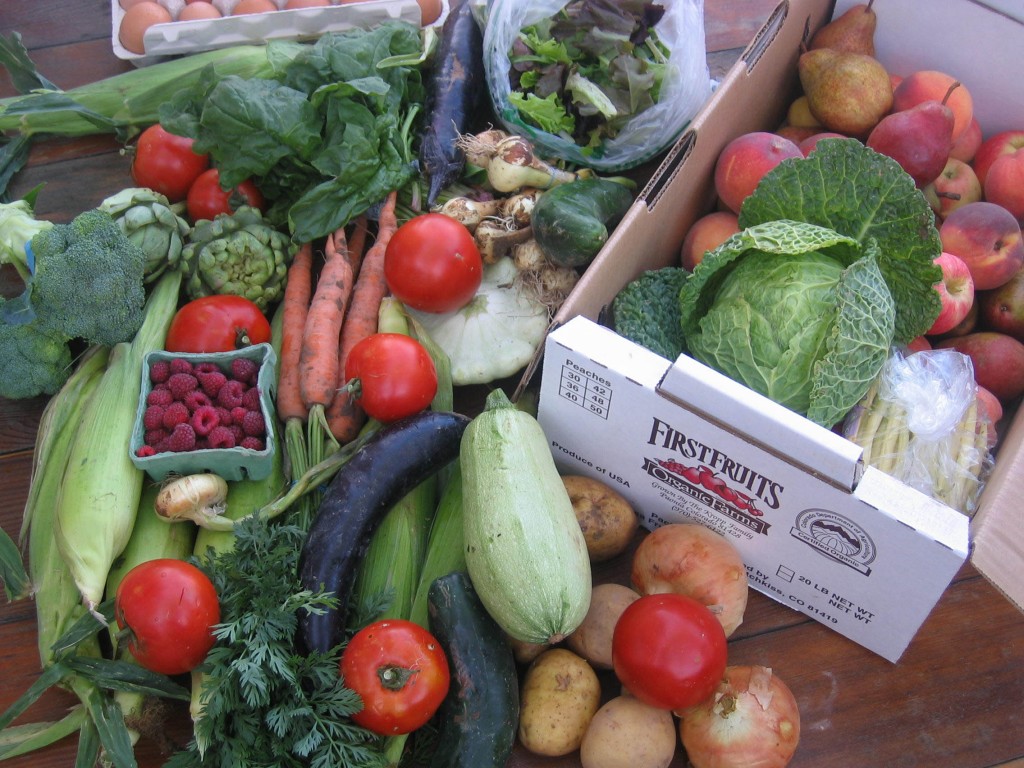
Here is this week’s Grant Farm’s CSA share. This is my abundant, small veggie share, plus my fruit share and a dozen pastured chicken eggs. I was at a loss for words, which is rare for me.
Luckily (or unfortunately for you), those occasional synapse lags never last long. Now it’s time to get to work figuring out what to do with all this produce, plus the lingering stuff from last week.
But first, I’m going to repeat something I wrote over a year ago. Josh, our witty CSA coordinator at Grant Farms, mentioned in his weekly newsletter how important fresh, wholesome, organic food is to our health. As a nutritionist, helping people make lasting and healthy lifestyle changes revolves around food. As an advocate for the return of old-fashioned food (real food), I’m on a mission to support the farmers who grow that food. Josh was right when he said that “many of our health issues are rooted in the food we eat and how it is grown or raised.”
Skip the overblown health claims for expensive supplements, don’t bother with the next dietary fad, avoid fast food and processed junk foods – eat the real thing – wholesome, traditional, real food.
Food Pyramid Remix (my take – late fall, 2008)
The government has made an effort to let us know what we should be eating on a daily basis by creating the Food Pyramid. Rather ironic, wouldn’t you say? Here we are at the top of the food chain and we’re the only animals in need of eating instructions.
I’m not picking sides, but in light of some of the decisions made by our elected officials, maybe we should educate ourselves and figure out what we should eat on our own.
Okay, having said that, I’m going to throw my two cent’s worth into the mix. More irony, you say? I suppose so, but at this point, there’s an overload of complex and confusing information from too many sources. It’s time to slow down and rethink things. We all have to eat, why is it so confusing to choose a healthy diet? Why are we so obsessed with food and yet so unhealthy as a culture? Part of the problem is too many choices in a world of food politics and an industry worth billions of dollars a year — in the United States alone. That can make eating complicated and even stressful.
It doesn’t have to be.
Here are a few of my tips for healthy eating:
1. Eat whole, fresh food (preferably organic).
2. Make whole plant sources, especially vegetables, legumes, and fruit your foundation. You can even eat veggies for breakfast — it’s okay, trust me. Choose whole grains such as brown rice, quinoa, and teff.
3. For the most part, choose foods you can hold in your hands and wash. Can you wash a box of Kraft mac and cheese or a package of ding dongs? You can wash a tomato, cabbage and you can rinse brown rice. See how easy that is?
4. Don’t eat food that never spoils. Remember my HFCS post? The pink snowballs and the chocolate hockey pucks? As I mentioned, I’ve had those on my closet shelf for over a year. If it doesn’t rot, it’s not food.
5. If animals, insects, and bacteria won’t eat it, maybe we shouldn’t. Food that has been sprayed with chemicals to repel critters is not a good choice for people either. Whoa, that doesn’t mean bugs are smarter than we are, does it? Yikes, maybe so.
6. You’ve all probably heard this one before — don’t eat foods from the middle of the grocery store. Stick to the periphery where the real food is located.
7. Make it yourself. Learn from your grandmother. Enjoy the cultural wisdom of food. My mother grew up in a very poor family in the south during the depression. I mean dirt-floor poor. They had few food choices, but somehow the family was fairly healthy. All they had was what they grew or traded someone else for – vegetables, beans, cornbread, dandelion greens, whatever fruit or nut tree was around, some oatmeal and an occasional pig, chicken, or fresh-caught game (birds, fish, rabbits). My grandmother also made them all take a dose of cod liver oil regularly. Hmmm? When you think about it, you’ve got some very healthy food choices there. They either grew or caught everything they ate. I know things are different now and you just don’t have time to go rabbit hunting on your lunch hour, but it doesn’t have to be complicated or expensive.
8. To sum it up: eat less, eat slower, use smaller plates, join a CSA, frequent farmer’s markets, choose fresh ingredients, eat more vegetables, choose humanely treated and pastured animal sources, skip the junk food, and savor your food. Part of healthy eating is enjoying what you eat, how you prepare it, the cultural variations, and sharing it with others.
Go forth and eat real food.
Melissa
Tuesday, August 18th, 2009

I love beets.
But you already knew that if you’ve been following this blog for any length of time.
Now, thanks to some researchers at the University of Exeter in the UK, I have documentation that this deadly serious vegetable is a performance-enhancing substance. In fact, there are forty pages worth of scientific documentation on just that subject in the August 6th issue of the Journal of Applied Physiology. If you’re interested.
Yes, the beet root is not only well-suited for a starring role in an offbeat Tom Robbins’ saga, but it also has important implications in mitochondrial respiration.
Deadly serious? By all means.
Do you care? Probably not.
But that’s never stopped me before. Here’s the scoop. To make a long and very convoluted story short, researchers have determined that beet root juice, which contains inorganic nitrate, decreases human oxygen requirements during sub-maximal exercise and enhances tolerance to high-intensity exercise.
So, how did they figure this out?
The researchers rounded up a compliant study group of males, aged 19-38 years old (only guys that age would agree to this). Half the group drank 500 mL per day of beet root juice, while the other half drank black currant juice, which has little nitrate content. They were hooked up to metabolic equipment to measure pulmonary gas exchange, their BP and heart rates were monitored, and capillary blood samples were collected during several days of exercise testing and juice drinking.
Well, guess what? The beet root drinkers showed significantly improved exercise tolerance and muscle oxygenation. I doubt you have to be a 19-38 year old male to benefit in this way by eating beets or drinking beet juice, but I’m happy to let them be the guinea pigs.
Ah, but here’s my take on it. Don’t wait for beet root capsules to be sold at your favorite supplement store (just wait, it will happen). Instead, eat the whole beet and enjoy it. You’ll be able to run faster and farther. Seriously.
Well, maybe it just won’t hurt as bad.
The above photo was my lunch. I sautéed onions, garlic, celery, carrots and beets in a little coconut oil for about 6-8 minutes. I added some leftover cooked brown rice and a few splashes of chicken broth and stirred occasionally for another 5 minutes or so, until rice was hot and veggies were lightly cooked.
Now I’m going to go run (maybe I’ll just walk) my dog 16% more efficiently than if I hadn’t eaten beets. That might be a bit of a leap, but you get the idea.
Other beet-obsessive posts I’ve written include:
Gluten-free, chocolate beet cupcakes (just trust me)
The beet goes on — dairy-free, beet ice cream (yeah, I know, I know)
Tom Robbins, Jitterbug Perfume and the deadly serious beet
Tips on storing and using both the beet root and the greens (raw or cooked)
Seasonal foods nutritional profile of beets
Off and running,
Melissa
Saturday, May 2nd, 2009
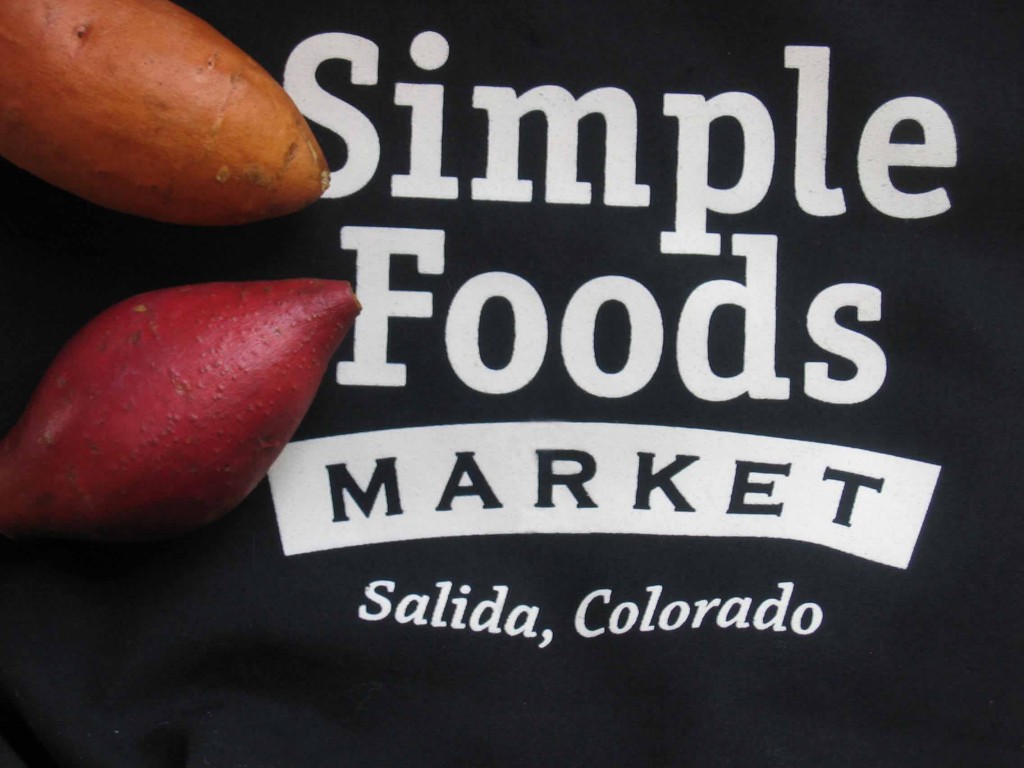
What is the difference between a sweet potato and a yam?
It’s a bit like the difference between Pluto and Goofy. They’re not quite the same, but almost. Or maybe not at all. Hmmm?
With the stock market tanking and the swine flu looming, maybe you haven’t given it much thought. That’s where I come in and save the day. I’m sure you’re quite curious and on the off-chance you have no clue what the difference is, I’m here to explain.
Why, you ask?
First off, no yawning.
And second, we’re food people, we need to know this stuff.
Yams and sweet potatoes are two different vegetables, they’re not related. If you think you’re eating a yam, it’s most likely a sweet potato if you bought it in a US market. Yes, it’s confusing. Ah, but to enlighten us, the US Department of Agriculture requires all labels that feature the word yam to also include the word sweet potato.
Huh?
I love it when the government steps in to clear things up.
To add to the confusion, sweet potatoes aren’t related to white baking potatoes at all and in New Zealand sweet potatoes are called kumara. In the ultra-abridged version of Hinduism, Kumara is the commander and chief of the divine army of the gods. He was also in command of an ancient version of Luke Skywalker’s lightsaber. Similar to Luke’s mission, Kumara used his mighty sword to slay ignorance (handy little device, swing away Kumara).
How do I spiral from sweet potatoes to mystical weapons? I keep promising myself I won’t do that. And why is this sweet potato yam thing so confusing? Actually, it’s not. Here are the differences.
Yams
A true yam is common in tropical climates (Africa, the Caribbean, South America) and contains more natural sugar than the sweet potato. The word “yam” comes from the African word nyami, meaning to eat. Yams aren’t common in traditional US markets, but you might find some in specialty markets. There are over 150 yam varieties available world-wide.
Sweet Potatoes
We’re eating sweet potatoes if we’re using one of the two tubers shown in the photo above. Sweet potatoes vary in color from yellowish to dark reddish-orange (see my two picks above). The darker one is often wrongly called a yam. They’re both sweet potatoes although the lighter skinned ones are not as sweet and have more of a crumbly, dry texture. The darker, vivid colors contain more moisture and sweetness. I prefer using the red over the yellow sweet potatoes in my gluten-free baking. That way I can go with less added sweetener and also not worry as much about dryness. Those of us who have taken on the challenge of baking without gluten need all the help we can get and to be honest, I’d rather figure out some of my own tricks and tips using real food rather than the growing collection of modified starches and additives.
Nutritional profile of sweet potatoes
Not only are they sweet and moist, they’re packed with goodness. Sweet potatoes are a great way to get your sugar fix in a healthy way. Packed (260 % daily value) with vitamin A and rich in vitamin C, these vegetables are an excellent source of antioxidants. They also contain a unique storage protein that is high in antioxidant capabilities.
Roasted sweet potato fries (one of my favorites)
what you need
• 2 or 3 medium/large sweet potatoes, washed and cut in medium “French fry” wedges
• 1 tablespoon coconut oil or olive oil
• sea salt
what you do
• Preheat oven to 425
• Put prepared sweet potatoes in large bowl, drizzle with oil and gently work it over potatoes evenly
• Arrange potatoes in a single layer on an oiled cookie sheet
• Bake for 30 to 40 minutes, watching carefully and stirring occasionally
• Salt to taste and serve immediately
* You can also use various spices such as paprika or ground cumin to add different flavors. Blend those spices in with the oil.
Go forth and sweeten up your baking the natural way!
Melissa
Monday, April 13th, 2009

I’m in the midst of my spring detox/cleanse and because of its super-star status, I’ve decided to recycle a past post I did on cilantro and add it to this series. If you care to follow along on my spring cleanse, please refer to the previous 6 posts. There’s a lot of good cleansing, detoxing and nutritional information amidst my rambling. Plus a few good recipes.
Last week I did a whole post on detoxing herbs, but I wanted to dedicate a separate post on cilantro because of its versatility and healing properties.
Cilantro refers to the leaves of the coriander plant. They look similar to flat leaf parsley. The seeds of the plant are ground and called coriander spice. Cilantro has a vibrantly fresh smell and it adds a distinct flavor to foods, especially southwestern fare. I love the stuff and always have a batch on hand.
It’s especially important during cleansing as it’s rich in all kinds of beneficial phytonutrients, flavonoids, detoxing substances, and antimicrobial compounds. One of which has been found to have twice the antibiotic power of the commonly used drug, gentamicin. In fact, researchers have found several different antibiotic substances in fresh cilantro, suggesting its use as a potential food additive to prevent food-borne illnesses (of which we’ve been hearing a lot about lately). According to other studies, cilantro helps to normalize blood sugar levels and stabilize lipid levels. Not to mention the fact that 2 tablespoons of fresh cilantro contains less than 1 calorie. You get a lot of bang for your buck with this little gem. I’ve been adding it to everything from salads to smoothies lately. Cilantro and burdock root are at the top of my “favorite detox nutrients” list.
In good health!
Melissa
P.S. I’ll be back to normal (whatever “normal” is) posting in a couple of days. Two weeks of cleanse posting is enough! Hey, I heard that sigh of relief.
Thursday, March 12th, 2009

March is National Nutrition Month.
You all knew that, right?
Aren’t there festive parades scheduled for your city? Here in Colorado we have prune parties and turnip green galas planned throughout the month. You can catch me (Miss Eggplant) blowing kisses and tossing Brussels sprouts from a horse-drawn vegetable cart during this Saturday’s National Nutrition Month parade through downtown Denver. It’s a big deal.
Okay, so no one’s ever heard of it.
Well — now you know, so let’s start celebrating.
I took the above photo yesterday while on my weekly trip to the market. Yes, weekly now that I’m on a serious budget and am protecting myself from overspending on bok choy. Most women go shoe shopping when times get tough, I head for the organic veggie isle at my local market, Vitamin Cottage Natural Grocers. Seriously, doesn’t this produce look beautiful? I love this Natural Grocer and they’ve provided me with everything I’ve needed while I’ve been in mourning the past few months, waiting for my favorite farmers to start delivering my organic veggies and fruit again.
When that happens, look for weekly nutrition tips, recipes, and information as we go through the growing season. I’m planning to post about whatever the bounty is for that week, including ways to use every bit of it. No wasting. I’m planning some good stuff for that 26 week period. Stay tuned — and join a CSA.
In the meantime, since it is National Nutrition Month, check this past post I did listing my top tips for healthy eating. And for the latest information on how to avoid pesticides, check out the Environmental Working Group’s data on pesticides and human health. They also have a handy little shopper’s guide you can download and take with you so you know which fruits and vegetables are the highest and lowest in pesticides. Organic is usually the best choice, but when we have to pick and choose for financial reasons this list will help you make the best choices. They also explain in detail why you should care about pesticides in your food.
Go forth and celebrate National Nutrition Month with me!
Melissa
Sunday, March 1st, 2009

First off, I’m not suggesting you eat raw teff with a fork. That would be an effort in futility as teff is the smallest grain in the world and would be impossible to scoop up with a fork. I just wanted to showcase its dainty size and figured this would do the trick. Three-thousand grains of teff weigh only one gram, but one pound of seed can produce up to one ton of grain in only 12 weeks. Got that?
Teff is what nutritionists call a nutrient-dense food source because of its high nutrient to calorie ratio. Native to Ethiopia, it’s an ancient grain packed with goodness and rich in fiber, calcium, iron, high-quality protein, and various vitamins. It has a delicate, savory, almost herbal taste as a cooked grain and provides a rich, cocoa color to baked goods when used in flour form. The flour also has a faint chocolate flavor with hazelnut overtones. Do I sound like a grain sommelier? If I do, it’s because teff is one of my favorite grains — it’s power packed, but sweet and girlie (Zena Warrior Princess food). I use it whole to make porridge and polenta and substitute small amounts of the flour in recipes for quick breads and spiced muffins.
My sources for teff are either Bob’s Red Mill or The Teff Company. Wayne Carlson, owner of The Teff Company located in Caldwell, Idaho, worked and lived with a farm family in Ethiopia back in the 1970s. When he returned to Idaho, he was struck by the geological and climatic similarities of the Snake River Valley in Idaho and the East African Rift where teff is grown. He decided to give the ancient Ethiopian grain a try here in America and now some of the finest Maskal teff in the world is grown in Idaho.
I eat a mix of gluten-free oats, teff, toasted and blitzed brown rice* and chia for breakfast once or twice a week during the winter. A nutritious breakfast is a good way to start the day and helps keep your blood sugar and energy levels balanced for several hours. We also have a higher level of enzymatic activity in the morning, so breaking down, absorbing, and assimilating our nutrients is more efficient at that time of the day. That old saying, “eat breakfast like a king, lunch like a prince, and dinner like a pauper” is right. Or, in my case, like a queen, princess, and pauperette.
Here’s one of my favorite winter morning breakfasts. I like mixing my ingredients — this is also a good way to use up small amounts of grains and seeds left in the bottom of various bags. It doesn’t matter, there are no rules, mix and match as you please.
Power porridge
1/2 cup old fashioned rolled oats (certified gluten-free*)
1/4 cup teff
1/4 cup toasted and blitzed brown rice*
2 small scoops chia seeds
2 & 1/4 cups water or a mixture of water and organic apple juice (you can also use rice milk)
pinch of sea salt (optional)
Extras
1 teaspoon vanilla
cinnamon, nutmeg, allspice, cardamom
nuts (pecans, walnuts, almonds)
seeds (sunflower, pumpkin)
dried fruit (raisins, dates, cranberries)
chopped apple
Use a small to medium-sized pot with a lid. Bring liquid (add salt) to a boil and slowly add grains and other ingredients. Mix well, turn heat to low, cover pot and let simmer for 15 – 20 minutes. Check and stir every 5 minutes or so and if it looks like the liquid is too low, add a small amount more. I usually end up adding a little more water as it’s cooking because I like my porridge creamy with a risotto-like texture (plus, I’m at a higher altitude). Top with a dab of honey or maple syrup and some coconut milk (or whatever type you like) and enjoy. I even add a spoonful of vanilla goat yogurt on occasion.
Makes 2 hearty servings, adjust accordingly.
* I use Montana GF Processors Oats (I love these guys). Oats are naturally gluten-free, but are often contaminated with wheat through growing and processing methods. Some people with celiac disease can’t tolerate oats, even the gluten-free version, so talk with your health-care provider and make your own decision regarding oats. You can also use gluten-free buckwheat groats in this porridge mix.
* Toasted and blitzed brown rice makes for a wonderful hot breakfast cereal alone or mixed with other ingredients. Pour one cup of dry rice (brown, wild, or a mix) in a heavy, ungreased saucepan (I use an old cast iron skillet that was my grandmother’s). Heat on medium heat and stir regularly. Let the rice toast for about 5 to 10 minutes until golden brown. It may make some “popping” noises, but don’t let it burn. Cool, pulse in a food processor, and store in the refrigerator (use as needed).
Go forth and eat a hearty breakfast.
Melissa
Wednesday, February 25th, 2009

Organic food — is it worth the money?
I think so and from what I’ve read, most of the time there is a difference in the nutritional value, not to mention the avoidance of pesticides and the impact on the environment. To me, it’s as much about what I’m NOT eating as what I am eating. This is important if you have celiac disease or other autoimmune or chronic conditions — and most of us have something a little off-kilter going on inside (hey, no body’s perfect). I’m going to resist launching into an anatomy lesson here, but our bodies don’t need the additional burden of figuring out what to do with the pesticide residue that often tags along with conventionally grown foods.
A National Academy of Sciences study stated that, “Low level pesticide exposure can cause serious, developmental risks to infants and children, some with lifelong consequences.” While limiting exposure is especially important for kids, it’s important for everyone, regardless of age. Continually dosing ourselves with synthetic fertilizers and chemicals designed to kill insects, fungal “pests,” and weeds can’t possibly be good for us. If this stuff keeps animals, insects, and bacteria from eating the food, maybe we shouldn’t be eating it either. Uh-oh, does that mean these little critters are smarter than we are?
At least try to minimize exposure by choosing organic when purchasing the following fruits and vegetables (the first list below). These have been labeled the “Dirty Dozen” by the Environmental Working Group after running over 50,000 tests for pesticides on produce collected between 2000 and 2005. If you can’t opt for organic in all your food choices, try to make your conventional choices from the “Cleanest 12” and your organic choices from the “Dirty Dozen” list.
The Dirty Dozen (highest in pesticide residue in order as listed)
peaches
apples
sweet bell peppers
celery
nectarines
strawberries
cherries
lettuce
imported grapes
pears
spinach
potatoes
The Cleanest 12 (lowest in pesticides)
onions
avocados
sweet corn (frozen)
pineapples
mango
sweet peas (frozen)
asparagus
kiwi
bananas
cabbage
broccoli
eggplant
Get the full list of results at www.foodnews.org.
I’m anxiously (seriously, I can’t sleep at night) awaiting the spring start-up of my Grant Family Farms CSA weekly delivery of organic fruits and vegetables. Have I mentioned how much I love these guys? Okay, okay — I know I talk about them a lot, but I’m not obsessed or anything. I promise. Well, maybe a little, but the bottom line is — I want safe, healthy, nutritious food that is locally grown by people who not only care about the food they’re growing, but how it impacts the environment as well. Yes, I admit it, I love these people.
Go forth and eat organic food, join a CSA, and thrive!
Melissa
P.S. The above photo depicts some odds and ends in my refrigerator crisper drawer and the dregs from almost-empty rice bags. Everything is organic. I also had a left-over baked sweet potato and some home-made broth in the fridge. The result was the most wonderful and nutritious soup. Eating organic does not have to be expensive and with a little creativity you can stretch something like this “catch-all” soup for 2 or 3 days.
Disclaimer: All material on this website is provided for informational and educational use only and
should not be used for diagnostic purposes. Consult with your physician regarding any health or medical concerns you may have.
|
|


