

|
Archive for the ‘Celiac & Gluten Intolerance’ Category
Wednesday, July 25th, 2012

Gluten-Free Tomato and Arugula Pizza
I have a half-written blog post on weight loss, carbohydrate and fat metabolism, and mitochondrial dysfunction, but it’s taking me some time to sort through the material and make it marginally readable. I want to share my findings with you, but it’s a tough subject to make entertaining. I’ve discovered some interesting variables in my attempt to get back in shape and lose the weight I gained while co-writing (with endurance athlete Pete Bronski, founder of No Gluten No Problem) a book on gluten-free sports nutrition and training.
Yes, I do see the irony.
Anyway, I know you’re dying to hear all about metabolic flexibility and why boosting the density of your mitochondria will help you burn calories more efficiently, but you’ll have to wait until next week. This whole weight loss thing is not easy, at least not if you plan to keep it off FOREVER. That’s the point, right?
But for now, although not exactly “diet” food, let’s talk about gluten-free pizza. Yes, I know — I have an excessive number of pizza-centered posts here on my blog. Pizza is my comfort food and I’m not afraid of carbs (decent carbs), so I usually make some version of vegetarian pizza at least once a week. This was the “Friday night special” last week. I served it with a nice, semi-chilled glass of red wine. There’s no reason a couple of slices of this pizza can’t be part of a healthy eating plan, especially if you top it with low calorie, nutrient-rich vegetables.
As some of you know, I have a CSA share through Grant Family Farms. It includes organic veggies, fruit, pastured eggs, and micro-greens. I’m loving the micro-greens and have been experimenting with everything from mustard micro-green pesto to komatsuna salads. This recipe is for fresh arugula topped pizza.
Gluten-free tomato and arugula micro-green pizza
what you need
1 package (2 crusts) Udi’s gluten-free pizza crusts (or, your favorite version)
1 to 2 tablespoons extra virgin olive oil
2 cloves garlic, finely minced (more if you like garlic)
tomatoes, thinly sliced, juice and seeds removed *
sprinkling of cheese
fresh arugula micro greens, about 2 cups washed and dried
what you do
1. Brush the pizza crust with a small amount of olive oil. Don’t use too much, but cover the crust with a thin brushing of oil.
2. Sprinkle with minced garlic and top with sliced tomatoes. I like to use a lot of tomatoes and cover the whole pizza with a single layer.
3. Top with shredded cheese. I used a small amount of freshly grated Parmesan cheese on this pizza, but any cheese is fine.
4. Bake according to pizza crust directions. I’ve been baking the pizza on the outside grill because it’s been too hot to turn the oven on. The crust comes out nice and crunchy.
5. Once the pizza is cooked, top with fresh arugula.
* I slice the tomatoes and spin them in my salad spinner to de-juice them. Then I save the juice to add to homemade salad dressings.
Peace, love, and gluten-free pizza!
Melissa
P.S. Stay tuned for mitochondrial density, movement, and weight loss.
Sunday, June 24th, 2012

This is the scene I was rewarded with a couple of years ago while backpacking in the Colorado high country. It was definitely worth the climb (summit 13,951 feet) and although I kept my distance in respect to my mountain goat friends, I thoroughly enjoyed our meeting.
When Maggie and Amy asked me to do a guest post at The Balanced Platter and explained that June’s editorial calendar included the theme, traveling on a GF diet, I immediately thought of high-country travel—as in backpacking. No cars, trains, or airplanes needed—just a good pair of hiking boots and a loaded backpack.
So—what does it take to fuel your engine and nourish your body for “peak” performance? Follow these basic tips for sustained energy (a long day on the trail) and quick bursts (climbing the last 500 feet to the summit). You’ll also need some turbo-charged recovery food so you can sleep well, climb out of your tent at the crack of dawn, make a hearty breakfast, and start all over again—day after day. That’s what backpacking is all about—sustained energy. And yes, I call that traveling on a GF diet.
These are basic eating strategies for all-day energy. Although sometimes one category serves the purpose better than another, most meals and snacks are a mixture.
Complex carbs
High-fiber, complex carbs will help you plod along for long hours on the trail. They provide more sustained energy because they’re digested (broken down) more slowly than simple sugars. Oats, brown rice, quinoa, teff, granola, and buckwheat are all examples of complex carbs. Start the day with a blend of carbohydrate (complex and simple), protein, and fat. Oatmeal with dried fruit, nuts, and brown sugar is a perfect way to start the day.
Simple carbs
Say you’ve been hiking along at a moderate intensity for 3 or 4 hours and you realize you’re about a half an hour away from a very steep 500 foot climb to the summit. You need a quick fix and that comes in the form of fast burning, simple carbs like GF jelly beans, dried fruit, honey, or chocolate chips. They’re easy to digest and the simple sugar goes immediately to your working muscles and nervous system.
Fat
High-quality, slow-burning fats are essential for backpacking. They provide more calories (energy) per gram, which you need when you’re physically active all day. Fats give you staying power. Mix them with complex carbs for long-lasting fuel. Nuts, seeds, coconut, and jerky (salmon, beef, bison provide fat and protein), cheese, and sausage are great choices for backpackers.
Protein
Many of the complex carbs (teff, quinoa, oats) and fats (jerky, nuts, seeds) all provide a good dose of protein as well. Protein helps repair the muscles and connective tissue you break down during long hikes. Protein is essential for recovery.
Nutrition bonus
Backpacking is physically demanding and stresses the body in many ways. I like to dehydrate nutrient-dense, hearty greens (kale, spinach, chard) and create my own dry soup mixes for a daily nutrition bonus of antioxidant protection. Hearty greens dehydrate well, weigh next-to-nothing, and rehydrate immediately. They’re perfect for backpacking. Mix the dehydrated greens with instant potato flakes and a gluten-free chicken base for a satisfying and nutritious side soup. At camp, all you have to do is add boiling water to the dry mix, stir, cover, and let sit for 5 minutes.

Granola-Style Energy Bars (Perfect to make ahead and eat on the trail)
Makes 16 bars
Courtesy of The Gluten-Free Edge: A Nutrition and Training Guide for Peak Athletic Performance and an Active Gluten-Free Life (by Peter Bronski & Melissa McLean Jory)
What you need
1/4 cup almond meal
2 tablespoons raw shelled hemp seeds
1 teaspoon ground cinnamon
1/4 teaspoon salt
1 cup pecans
1 cup almonds
1 cup unsulfured dried apricots (about 6 ounces), chopped into chunks
1/4 cup certified gluten-free, rolled oats
1/2 cup chocolate chips
1/3 cup maple syrup (grade B is thicker)
1 large egg
1 tablespoon coconut oil, melted, plus some to grease the pan
1 teaspoon gluten-free pure vanilla extract
What you do
1. Preheat oven to 350 degrees. Grease a 9-inch square pan.
2. Place the almond meal, hemp seeds, cinnamon, and salt in a food processor and pulse until well mixed.
3. Add the pecans, almonds, oats, and apricots and pulse several times until the nuts are in small chunks but not completely ground. Add the chocolate chips and pulse a few times, leaving larger chunks.
4. In a medium bowl (big enough to hold all the ingredients), whisk together the maple syrup, egg, melted coconut oil, and vanilla. Whisk for 1 minute to ensure all ingredients are mixed.
5. Add the wet ingredients to the dry ingredients and mash together with a fork. Use your hands if you have to.
6. Spread the mixture in the prepared pan. Cover with parchment paper, and using your hands, flatten evenly. You can also use an unslotted spatula to flatten the mixture.
7. Place on the center rack in the oven. Bake for 22 to 24 minutes, until golden brown. Remove from the oven and let cool. Place the pan in the refrigerator to chill before cutting into bars. Store in an airtight container in the refrigerator.

Peace, love, and happy trails from The Balanced Platter!
Melissa
PS Leave us a comment sharing your favorite gluten-free hiking snack.
Wednesday, June 20th, 2012

Micro-greens are early versions of most vegetables, leafy greens, and some herbs. They aren’t the same as sprouts. They’re more like baby, leafy-green houseplants that you can eat. Sprouts are grown in water, micro-greens are grown in soil and harvested when the leaves open, but before they mature. The main difference between the two is the size of the root and the length of time before harvest. Although neither take long to grow, sprouts are quicker to reach harvest size.
I love micro greens — partly because they’re fun to experiment with and a nice diversion from regular vegetables, but also because of the vibrant colors, zippy taste, and nutrient density. They pack a lot of low-calorie punch in their tiny leaves and stems.
These feisty little mustard plants start with a sweet, mellow taste, but finish with a peppery bite. I sprinkle them on salads and tacos, but when I want full-on, zippy flavor (a touch wasabi-ish), this pesto recipe is the best. Serve with grilled salmon or pasta.
Mustard micro-green pesto
what you need
2 cups mustard micro-greens (washed and dried)
2 tablespoons chopped garlic scapes, about 2–3 scapes (or 2 garlic cloves)
2 tablespoons pine nuts
2–3 tablespoons extra-virgin olive oil
1 tablespoon fresh-squeezed lemon juice
1/2 cup freshly grated Parmesan cheese
pinch of sea salt
what you do
1. Place micro greens in a food processor. Add garlic scapes (or, peeled and coarsely chopped garlic cloves), pine nuts, and lemon juice and pulse a few times to chop and blend well.
2. Add the Parmesan and slowly add the olive oil while pulsing to reach the consistency you desire. I don’t like pesto to be overly oily, so adjust to your liking. Taste and add a pinch of salt if needed.
Pesto is user-friendly. Be creative.
Peace, love and micro-greens.
Melissa
Tuesday, June 5th, 2012

If you’re uninterested in knowing who won the three books I’m giving away to celebrate May as Celiac Awareness month and you’d like a recipe instead, scroll away. There’s an arugula salad with macadamia nut dressing recipe featured below. It’s a wonderful salad and the dressing makes for a nice diversion from oil and vinegar.
My intention was to do five book giveaway posts in May, but real life got the better of my good intentions and May zipped by much faster than expected. I’ll announce the current winners (three) and save the other books for random giveaways in June and July. It was also my intention to have my little neighbor girl help me pick the winners from the comments you all left, but my gosh, I had a flood of entries and although I couldn’t respond to many of the comments, I did read every word and am blessed to have such articulate and bright blog followers. Thank you.
I decided to resort to random.org to pick the winners. There was no way I could choose fairly. All the answers (and the delightful poems) were so good that everyone deserved to win. How could I pick just one? I couldn’t, so the “True Random Number Service” did it for me.
Drum roll, please.
Book #1: 125 Gluten-Free Vegetarian Recipes by Carol Fenster. This is one of my favorite cookbooks and the “Quinoa Pilaf with Pine Nuts and Dried Fruit” is a standard in my recipe collection. I love it. It’s a multi-use dish that everyone enjoys.
Congratulations to Jody E (comment #14)!
Book #2: Gluten-Free Recipes for the Conscious Cook by Leslie Cerier. This is a great, easy-to-follow cookbook full of healthy (and tasty) recipes.
Congratulations to Noelle (comment #27)!
Book #3: The Anti-Anxiety Food Solution: How the foods you eat can help you calm your anxious mind, improve your mood & end cravings by Trudy Scott. Wow, this post elicited so many heartfelt comments that I wish I had an Oprah-like pocketbook for giveaways! I’d give everyone a copy of this book. Because of the overwhelming response, Trudy emailed me with the offer to add another copy of her book to the mix. As I mentioned in my original post, I prefer to purchase the items I give away on my blog, rather than solicit products or accept free merchandise. This will be an exception since so many people are in need of help with anxiety (thank you, Trudy).
Congratulations to Renée (comment #35) and Joanie (comment #48)!
I will be contacting the winners via email. Stay tuned for the next round of book giveaways, and in the meantime, enjoy this recipe!

Arugula, grapefruit, avocado, and shaved fennel salad with macadamia nut dressing
what you need
dressing (makes about 3 tablespoons)
1/4 cup macadamia nuts
2 tablespoons water
1 tablespoon fresh squeezed lime juice
1 teaspoon agave nectar
1/2 teaspoon ground cumin
sea salt
salad (makes 2 servings)
2 to 3 cups arugula
1 grapefruit, peeled, seeded, and chopped in chunks
1 avocado, sliced
1/3 cup shaved fennel
what you do
1. Assemble the salad in a large bowl.
2. Place macadamia nuts in a food processor and pulse until finely ground.
3. Add the water, lime juice, agave, cumin, and salt to the food processor and pulse until creamy. If it’s too thick for your liking, add more water in very small amounts at a time, until desired consistency is reached. Makes about 3 tablespoons of dressing.
4. Toss 2 to 3 tablespoons of dressing with the salad and serve. Start with a small amount of dressing and adjust to your liking from there. Store extra dressing in refrigerator.
Thanks, everyone!
Melissa
Monday, May 28th, 2012

Depending on the situation, anxiety (tempered by control) can be a good thing. Many years ago while mountain biking in a somewhat remote area of Montana, my riding partner and I came across a grizzly bear. Needless to say, in that context, both of us hit the anxiety button.
YIKES! There’s a grizzly bear. Right in front of us. Just off the trail.
Luckily the bear wasn’t all that interested. He (she?) stood up, looked straight at us, took a couple of lazy sniffs in our direction, and ambled off. Although he showed no obvious signs of aggression, my anxiety level shot up significantly. And for good reason.
Normal anxiety is like normal inflammation. It’s a positive response to danger or injury and something that is built into our physiology. Without anxiety, we might do stupid things.
“Cool, there’s a grizzly bear. I’ll go stand by him (her?) while you take my picture.”
While anxiety can be innately protective, I’m convinced some of us got the fortified version of the anxiety gene(s) and some of us got the watered down version. You know the personality types. There are scaredy-cats with AVOIDANCE being a distinct personality trait and there are risk-takers without a care in the world. It takes all kinds, but somewhere in the middle might make for a healthier balance.
Sadly, according to the Anxiety Disorders Association of America, abnormal anxiety affects some 40 million people age 18 or older. That’s a lot of Americans living life hanging by a thread of jangled nerves. Are you one of them?
Enter Trudy Scott. She can help.
Although a lifelong adventurer (climber, skier, mountain biker, world traveler), Trudy had her own mid-thirties battle with serious anxiety. Her journey back to radiant health took her on a path of discovery that led to the book, The Anti-Anxiety Food Solution: How the Foods You Eat Can Help Calm Your Anxious Mind, Improve Your Mood & End Cravings. Trudy is a clinical nutritionist and has a private practice focused on natural solutions for anxiety and mood disorders. She’s “been there, done that” and knows the solution.
I met Trudy while attending the National Association of Nutritional Professional’s conference a few weeks ago in San Francisco. She’s a girl after my own heart. How often do you meet other nutritionists who telemark ski, backpack, mountain bike, and ice climb—and do it all gluten-free? I knew I had to include Trudy’s book in my “May is Celiac Awareness Month” book giveaway. She’s awesome, we hit it off right away, and there’s not a shred of abnormal anxiety in her personality. She found the cure through the right food and lifestyle choices, and she’s here to help you do the same.
If you’re interested in winning a copy of Trudy’s book, please do the following:
• Leave a comment on this post. Make sure you include your email address when prompted (it will only be visible to me) so I can notify you if you win.
• The giveaway closes Thursday, May 31st at 6 PM. It doesn’t matter if you’ve entered the other May giveaways.
I’ll announce all the winners next month in one “wrap-up” blog post. Stay tuned.
Peace, love, and a calm mind.
Melissa
Wednesday, May 23rd, 2012

This whole Domino’s pizza controversy got me thinking. And experimenting in the kitchen. And baking. And eating.
I won’t weigh in on the Domino’s debate as it’s been hashed-out, bantered around, discussed, argued about, and solved at this point. If you’re interested in a rundown, there have been plenty of gluten-free bloggers dishing up the details.
If you stopped by hoping to see who won the two cookbooks I featured last week (cookbook #1, cookbook #2), the winners haven’t been chosen yet. I plan to give away a few more books over the next two weeks to promote May as Celiac Awareness Month, so stay tuned. I’ll do a final post to wrap things up and announce the winners soon (hopefully the first week in June).
In the meantime, let’s celebrate with gluten-free pizza.
Gluten-free pesto pizza
what you need
prepared gluten-free pizza crust (I used Udi’s)
1/3 cup macadamia nuts (plain, not seasoned)
2 cups loosely packed fresh basil
2 cloves garlic
1/4 cup extra virgin olive oil
1 tablespoon fresh lemon juice
1/3 cup freshly grated Parmesan cheese
sea salt
fresh tomatoes, juiced
kalamata olives, pitted and sliced (just a few, they can be overpowering)
what you do
1. Preheat oven to desired temperature (according to pizza crust directions). Udi’s directions call for a 375 degree oven. Place macadamia nuts in a food processor and pulse until finely ground. Don’t over do it, or you’ll end up with nut butter.
2. Add basil and garlic to processor and pulse a few more time to mix the ingredients.
3. Slowly add the lemon juice and olive oil and continue pulsing. Scrape down the sides of the processor bowl with a spatula to insure even mixing.
4. Add the Parmesan cheese and pulse again. Season with salt.
5. Lightly spread a light, but even layer of pesto on a prepared gluten-free pizza crust.
6. Top with tomatoes and olives. Sprinkled with a small amount of freshly grated Parmesan cheese.
7. Bake for 10 to 15 minutes, or according to crust directions. Pizza should be lightly browned with cheese melted.
8. Remove from oven, let pizza rest for a couple of minutes, slice, and enjoy!
Note: store the remaining pesto in an airtight container in the refrigerator. It’s delicious on gluten-free pasta, roasted chicken, or crackers.
If you’d like to try making your own crust, Alta at Tasty Eats at Home has a fantastic quinoa pizza crust recipe. I’ve also been experimenting with oat flour to make pizza crusts. I haven’t quite perfected my recipe yet, but there’s a lot of potential with oat flour. Check Gluten-Free Prairie for product details. These are the same wonderful oats I’ve always been in love with.

Next up for the bookapalooza giveaway:
The Anti-Anxiety Food Solution, by Trudy Scott, CN
Go Dairy Free, by Alisa Marie Fleming
Drop the Fat Act & Live Lean, by Ryan D. Andrews, MS, MA, RD, CSCS
Plus some other surprises. Stay tuned.
Peace, love, and homemade gluten-free pizza!
Melissa
Wednesday, May 16th, 2012

Up next in my “May is Celiac Awareness Month” bookapalooza giveaway is organic chef, Leslie Cerier’s cookbook, Gluten-Free Recipes for the Conscious Cook. Another vegetarian favorite of mine, this book is filled with delicious, nutrient-dense recipes that are not only easy to make, they come with added health benefits as well. Leslie specializes in gluten-free, organic, whole foods cooking and creates her recipes with healing and thriving in mind. Not only does this cookbook have traditional recipe sections (breakfasts, main courses, sides, desserts), Leslie also treats us with savory sauces, sushi party ideas, basic grain cookery, and instructions on how to make nut/seed butters and milks. She covers it all—and does it with style!
Check here for more on Leslie, her cooking classes, recipes, and other cookbooks.
If you’d like a shot at winning a copy of Gluten-Free Recipes for the Conscious Cook, please do the following:
• Leave a comment on this post listing your favorite gluten-free grain and what you like to do with it. Example—Teff pancakes with goji berries and maca. By the way, this recipe is in the cookbook.
• Make sure to include your email address when prompted (it will only be visible to me) so I can notify you if you win.
• The contest closes Friday, May 18th at 6 PM. It doesn’t matter if you also entered Monday’s giveaway. Who knows, you might win twice! Go for it.
Peace, love, and gourmet food!
Melissa
Monday, May 14th, 2012

This post kicks off a series of book giveaways to celebrate May as Celiac Awareness Month.
May is also my favorite month of the year, green is my favorite color, emeralds are my favorite gemstones, Gemini is my preferred zodiac sign, and people with quirky personalities (Geminis) are appealing to me. These are all signs and symbols of May. As green is my favorite color and plants are my “go-to” food source, I thought I’d kick off this series of book giveaways with a vegetarian cookbook. I’m technically an omnivore, but I lean heavily into herbivore territory. If you’re remotely interested in my take on the human genetics of food preferences, check here. To me, the whole “eat like a caveman” thing is up for debate. At least as far as the meat-heavy focus is concerned. Plants form the foundation of my diet, just as they form the foundation of the food web, or the nutritional ecosystem.
In a nutshell: the sun shines. Plants (grasses) grow. Animals graze, converting the green stuff into protein (meat). Predators eat the animals that ate the green stuff that the sun magically converted into food.
In most cases, and for a variety of reasons, I prefer to be part of step #3 and skip step #4 altogether. I’m a plant grazer. I’m not much of a predator.
There are several reasons I’m kicking off this book give-away with Carol Fenster’s book, 125 Gluten-Free Vegetarian Recipes, plant grazing is just one of them.
May (celiac awareness month), gluten-free, vegetarian, vegan, and green are the most obvious reasons, but there’s more to the story. When my daughter was diagnosed in 1999 with a severe wheat allergy (which later was upgraded to celiac disease) and told to avoid all products containing wheat, one of the few resources we found to help us navigate our new wheat-free world was Carol’s book, Wheat-Free Recipes & Menus, first published in 1995. She wrote that book seventeen years ago!
Needless to say, Carol was ahead of her time, although that was more out of medical necessity than anything else. She discovered she was gluten intolerant a few years before she tackled writing her first cookbook. Ironically, her journey to internationally known, gluten-free cookbook author (10 cookbooks) started on a wheat farm in eastern Nebraska where she grew up. To add a touch more irony to the story, she married a wheat farmer. Don’t you love life’s twists and turns? But, all’s well that ends well. Carol’s family hasn’t abandoned her for making a successful career out of avoiding wheat and the gluten-free community has benefitted greatly by her efforts.
I’m especially thankful to Carol as that early cookbook of hers gave our family a place to start. So, to celebrate celiac awareness month, green veggies, and gluten-free cookbooks, I’ll be giving away a copy of Carol’s newest cookbook, 125 Gluten-Free Vegetarian Recipes. (As a disclosure: I purchased the giveaway book myself. Carol had nothing to do with this blog post.)
All you have to do to be entered to win is the following:
• Leave a comment on this post listing your top 3 favorite green vegetables. Green veggies only and you must list 3 choices.
• Make sure you include your email address when prompted to do so (it will only be visible to me) so I can notify you if you win.
• The contest closes on Friday, May 18th at 6 PM. My 5 year old neighbor next door and I will choose our favorite answer (remember 3 green veggies).
That’s it! Good luck. You’ll love this cookbook.
Peace, love, and green veggies!
Melissa
Thursday, May 10th, 2012
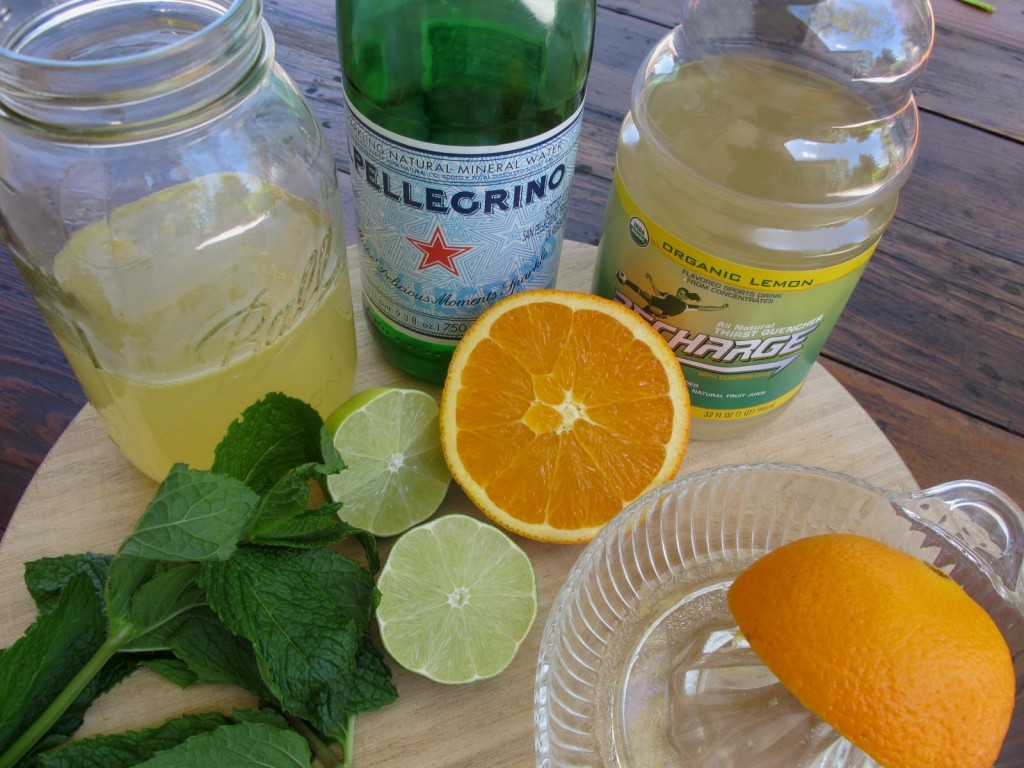
My last post focused on hydration and featured a power-packed smoothie recipe. I’m still on my hydration and recovery kick, but this time I’ll serve you up a nice “end of the day, I’m absolutely exhausted” recovery cocktail. I’m calling these evening, post-workout drinks sportinis. No alcohol needed. At least not most of the time. And, in my case, certainly not after an energy-draining, dust-collecting, 20 mile, single-track mountain bike ride. I’ll explain the alcohol piece shortly.
As some of you may know, I’m on a mission to get in shape and lose the extra pounds I gained over the winter co-writing a book on sports nutrition with friend, colleague, and ultra-endurance athlete, Pete Bronski of No Gluten No Problem. The Gluten-Free Edge: A Nutrition and Training Guide for Peak Athletic Performance and an Active Gluten-Free Life will be released in June. If you’re interested (semi-shameless plug), you can pre-order it here.
Aahh, the irony of sitting on my bum for long hours writing about nutrition, sports, and wellness—a downgrade in fitness and health, an uptick in weight and low energy. Life is a roller coaster ride at times, wouldn’t you agree?
Regardless of the ups and downs of life, it’s never too late to jump back on the healthy-living bandwagon. Never give up. Check here if you need some serious motivation – Arthur went from disabled, depressed, overweight vet to headstand-crow-chaturanga. Wow.
As Arthur demonstrates, it’s possible to have major gains in strength, aerobic capacity, energy, and over-all radiance if you put your mind and body into it – no matter where you are on the health spectrum. But, as you can see from the video, it takes foot-stomping commitment.
Now, back to the alcohol piece. Studies show that alcohol disrupts sleep patterns, even in low doses. Yes, as little as one glass of wine can impact sleep. You might fall asleep okay, but as your body starts metabolizing the alcohol, sleep becomes progressively more erratic and disturbed. Here’s what happens in a nutshell (or, in this case, a shot glass). You have your glass of red wine. You feel warm and mellow, relaxed and sleepy. An hour or two later you go to bed and fall asleep easily. The first half of the night goes well.
Zzzzzz.
And then, out of nowhere, you wake up at 1:12 AM. That’s a measly four hours after you fell asleep. And no matter what you do, you can’t seem to find na-na land again.
Toss. Turn. Pillow flip. Check the clock. Worry about lost sleep. Start fretting about bizarre things.
Oh my gosh, what if the refrigerator stops working? Did I pay my phone bill? Maybe I should get a puppy. What’s the deal with putting hot dogs in pizza crusts? Disgusting. I hate it that people get Parkinson’s disease. Did I shut the garage door? I’ll probably get another Alaskan Malamute if I get a puppy. Yikes! What was that noise? Is someone in the house? I’m hungry. And tired. Wish I could go to sleep.
Repeat frustrating cycle while incorporating new random worries. Kick covers. Curse crickets.
You get the idea. I don’t have time for that. I need eight hours of sleep. Straight. So, if I want to feel my best and reach my summer sports goals, I have to skip the wine (most of the time anyway, there are exceptions). Here’s where the sportini comes in. After a long day of work topped off with an evening mountain bike ride, I want to feel like I’m having something special like a glass of wine, but without the 2 AM pillow tossing. My post-exercise, recovery cocktails (mocktails/sportinis) replenish lost electrolytes and glycogen stores, provide antioxidants and phytochemicals, and boost hydration. Plus, they feel kind of special like I’m celebrating.
Lemon-lime-mint recovery cocktail (sportini)
Makes 1 large or 2 small servings
what you need
8 ounces S. Pellegrino sparkling mineral water
8 ounces Recharge organic lemon sports drink
1 organic lime (the fresh-squeezed juice and a little zest)
1 organic orange (the fresh-squeezed juice and zest)
1-2 fresh organic mint leaves
what you do
Place mineral water, Recharge, lime juice, orange juice, and zest in a shaker (I use a mason jar). Shake well. Add ice if desired (I don’t like ice, ever). Pour into a fancy glass, top with crushed mint leaves, stir gently, and enjoy.
PER SERVING: 182 calories; 0 g fat; 48 g carbohydrate; 4 g protein; 7 g fiber
SPORTS NUTRITION BONUS: excellent source of vitamin C; contains iron, calcium, magnesium, potassium, B vitamins, vitamin A (see details below, click table to enlarge)

Cheers!
Melissa
P.S. Stay tuned for upcoming book give-aways to highlight May as Celiac Disease Awareness Month.
Friday, April 6th, 2012

I’m guessing you probably stopped by hoping to find a recipe for something exciting like peanut-butter chocolate cake or frosted cinnamon rolls. Maybe a nice cheesy casserole or a chocolate Easter bunny.
Sorry.
I’ve been sidetracked lately by the dazzling microcircuitry and super-powers of the cerebellum, my favorite brain region. You might want to stick with me on this, especially if you’re curious about the many ways gluten can wreak havoc on your health and derail your Cirque du Soleil ambitions.

Here’s the deal.
Ataxia is a lack of muscular coordination and balance. It’s a loss of precise movement. The main function of the cerebellum is to evaluate how well movements initiated by motor areas of the brain are actually being carried out. It’s responsible for orchestrating muscular action in a controlled way. If the motor areas of the brain aren’t skillfully doing their jobs, the cerebellum detects the discrepancies and via a complex network of feedback signals, attempts to correct the errors.
If you want to ride a unicycle and juggle while being distracted by women in short skirts twirling around on roller skates, you better have a high-functioning cerebellum. Do you remember world-class, short track, speed skating champion, Apolo Ohno? Didn’t it make you a little nervous watching him bumping elbows with the South Koreans while taking corners at high speeds? He was practically horizontal. My gosh, how did he manage to stay upright (at least most of the time)? That kind of movement takes dynamic balance, sensory control, reflex adjustment, and incredible coordination. The cerebellum takes note of everything that’s going on with the body in space and makes instant adaptations to maintain equilibrium.
That’s if nothing is sabotaging its performance (and yours).
This under-appreciated little structure of lobes, white matter, grey matter, and other assorted goodies accounts for only 10% of the brain mass, but contains approximately half the neurons (specialized nerve cells) in the brain. That gives you an idea of how important it is. Researchers are also finding the cerebellum plays a roll in cognitive function and language. There’s a lot going on in that part of the brain.
Now throw some gluten into the mix and you might have problems with even the simplest of movements. Like walking, skipping, catching a slow-moving beach ball, or retrieving a word from the tip of your tongue. Cerebellar ataxia is one of the most common neurological manifestations of gluten intolerance.
Dr. Alessio Fasano, world-renowned celiac specialist and Italian cutie-pie (well, isn’t he?) from the University of Maryland’s Celiac Research Center says, “The gut is not like Las Vegas. What happens in the gut doesn’t stay in the gut.”
Such is the case with gluten ataxia. People with the genetic and environmental susceptibility to gluten ataxia may not even have gastrointestinal symptoms, although the problems begin when gluten hits the small intestine. Unfortunately, the potential for damage doesn’t stay there. It can also have an impact on the brain. Studies show that 60% of patients with gluten ataxia show cerebellar atrophy on MRI. One study I read suggested that prolonged exposure to gluten in people with gluten ataxia was irreversible. Obviously, the sooner the diagnosis, the better. I’m not a doctor (I’m a nutritionist taking ballet lessons), but I believe a healthy gluten-free diet of nourishing whole foods and activities that stimulate cerebellar function can do wonders for people with neurological problems and can be protective for those without.
What kind of activities?
Dance lessons, yoga, tai chi, juggling, tennis—any activity that requires balance, movement, and attention to detail. Even tossing a beach ball back and forth stimulates the movement centers of the brain. Research shows that structural changes occur in the brains of people who engage in activities that require balance and coordination—jugglers, basketball players, speed skaters, dancers. If there is evidence of architectural changes, then why not exercise your cerebellum? Nothing to lose and everything to gain.
Plus, you might have fun in the process. Latin dance lessons? Ballet?
Check out this video of cerebellar rock stars, Bob, Trish, Chip and Laura. It’s short (1:17), fun, and will give you an idea of what it’s like to have a top-notch sense of balance and coordination. This kind of skill takes a lot of dedication and practice and I bet on MRI, these folks would have a blue ribbon network of neurons guiding their movements. They’re exercising their bodies, but they’re giving their brains a workout as well.
Basketball-Juggling Trick Shot (Chip and Laura Edition) with Bob and Trish
Dance, twirl, and exercise your brain. Your cerebellum with thank you.
Melissa
Resources:
• Sultan, F et al., “The cerebellum: Comparative animal studies,” The Cerebellum, 2007; 6: 168–176.
• Hadjivassiliou, M et al., “Gluten Sensitivity: from gut to brain,” Lancet Neural, 2010; 9: 318-330.
• Sapone, A et al., “Spectrum of gluten-related disorders: consensus on new nomenclature and classification,” MBC Medicine, 2012; 10: 13.
• “Skaters’ Brains: Specialized training of complex motor skills may induce sports-specific structural changes in the cerebellum,” ScienceDaily, March 26, 2012; http://www.sciencedaily.com/releases/2012/03/120326112918.htm (accessed March 26, 2025)
• Gerard J. Tortora et al., Principles of Anatomy & Physiology (New York, NY: John Wiley & Sons, Inc., 2003), 462-463, 472.
• William D. McArdle et al., Exercise Physiology: Energy, Nutrition, and Human Performance (Baltimore, MD: Lippincott Williams & Wilkins, 2007).
Disclaimer: All material on this website is provided for informational and educational use only and
should not be used for diagnostic purposes. Consult with your physician regarding any health or medical concerns you may have.
|
|


